


How Rising Cement, Concrete and Steel Prices Affect UAE Construction Budgets
Will a rise in the cost of cement, concrete and steel make your UAE construction project exceed the approved budget?
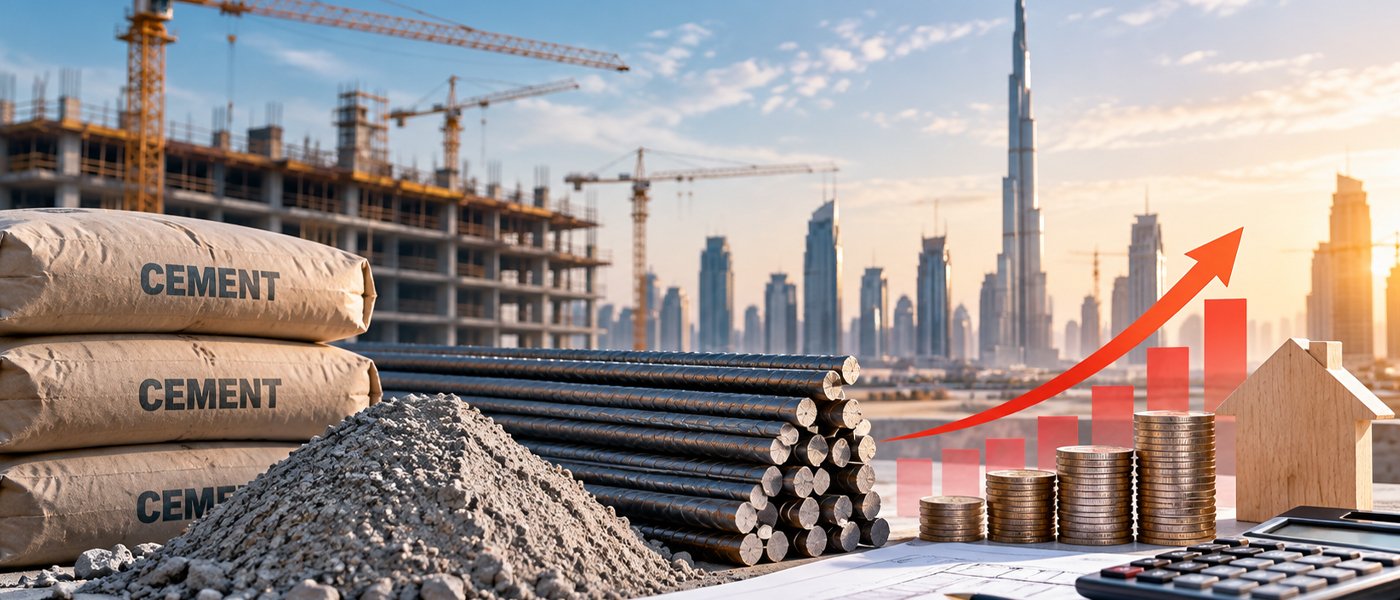
Price changes can alter the economics of a construction project even after the budget has been approved. In this article, we explain what is causing the current cost pressure, who is most at risk and how professional project management can help manage the effect.
What Is Happening to UAE Construction Material Prices?
The UAE construction market remains active, but developers are operating in a more volatile cost environment. AESG's Middle East Market Intelligence Report, based on tender returns from Q4 2025 through Q2 2026, reported increases of around 13% in concrete works and 16% in reinforcement steel. AESG expects UAE tender price inflation of approximately 5% to 8% during 2026.
The movement is not uniform across every material or every month. Dubai market data from August 2026, for example, showed cement prices remaining stable while concrete prices increased modestly and steel prices declined slightly from the previous month. However, several materials remained significantly more expensive than a year earlier.
This distinction matters. Developers should not make decisions based on a single monthly price movement. The real concern is how sustained material-cost volatility affects the overall project budget.
Why Are Cement, Concrete and Reinforcement Steel So Important?
The key ingredients in a building construction project are cement, concrete and reinforcement steel.
A rise in their prices will affect not just the cost of the material but also the quotation by the contractor/subcontractor.
This is even more evident for projects that include large structural components or where the budget is based on older market prices.
For instance, a feasibility study carried out several months ago would not be indicative of the cost of construction today. AESG has recommended that feasibility studies conducted as late as the year 2025 be benchmarked to current standards.
How Material Price Increases Affect Construction Budgets
1. Initial Estimates Can Become Outdated
The budget allocation for any construction project entirely depends on the assumptions regarding quantities, specifications, materials, and pricing. So, any increase in material costs can have implications on the budget, and the project owner may have to invest more money for the project to run and be completed.
2. Procurement Timing Becomes More Important
If the contractor purchases materials too early, then they also have to spend on storage. On the other hand, if they start buying the material when required, they have to pay based on the current price of materials.
A project management team can coordinate purchases according to the construction programme and identify the materials that need early commitment.
This matters most for high-volume materials such as reinforcement steel and concrete.
3. Variations may Lead to Increased Financial Risk
Increased material costs pose many challenges when variations occur due to changing requirements and design during the construction process. The variations in design or materials specifications will increase procurement requirements. If the project team is not aware of the effects of the variations on the cost and schedule prior to its approval, it can cause budgeting risks.
Variation management enables developers to be aware of the potential financial impacts prior to the implementation of the variation works.
What Can Developers Do to Control Cost Risk?
Cost control need not imply the attempt to predict exactly the price of each material every month. Cost control implies establishing a system in which the project team will be able to react to changes in the market conditions.
A professional project management consultancy in the UAE can help developers with:
- Regular cost and market reviews
- Updated project cost benchmarks
- Quantity and specification reviews
- Procurement planning
- Supplier and quotation comparisons
- Long-lead item monitoring
- Variation assessment
- Contingency planning
- Budget-versus-actual cost tracking
- Review of price-fluctuation and quotation-validity terms in contracts
The objective is to identify exposure early rather than discover a significant budget shortfall when construction is already underway.
Why Professional Project Management Matters
A PMC company in Dubai can do more than supervise the construction process. Project management involves linking the cost plan to procurement, programme, design and contractor management.
Suppose reinforcement steel prices rise shortly before structural work begins. The project manager can review quantities, the schedule and contractor commitments before the critical procurement stage is reached.
Similarly, if concrete prices change, the team can determine whether the change affects the current budget, a procurement package or the project's overall financial plan.
This creates a more informed decision-making process.
Don’t Let the Cost Volatility Catch You off Guard
It is important for any developer to realise that rising costs of building materials don’t necessarily mean that their development project becomes unfeasible, although the bigger danger is that one will fail to take account of those price changes and factor them into the decision-making process.
That is why it is essential for every developer to keep track of the market situation, review their cost expectations, control variations, and coordinate the procurement to ensure better visibility of the risks that they face.
And that’s when effective project management comes in handy.
Construction Cost Control: How To Do It
The most efficient means of ensuring cost control in your construction project is to get in touch with the HKMG Project Management via hkmgpmc.com. You will be able to discuss your construction project needs and learn about our professional project management that will help you monitor costs, procurement risks and budget control.
Let's connect.
Stay Updated


