


Why Do Dubai Construction Projects Get Delayed? 5 Causes Developers Should Watch
Why do Dubai construction projects continue to run late, even when developers plan carefully from day one?
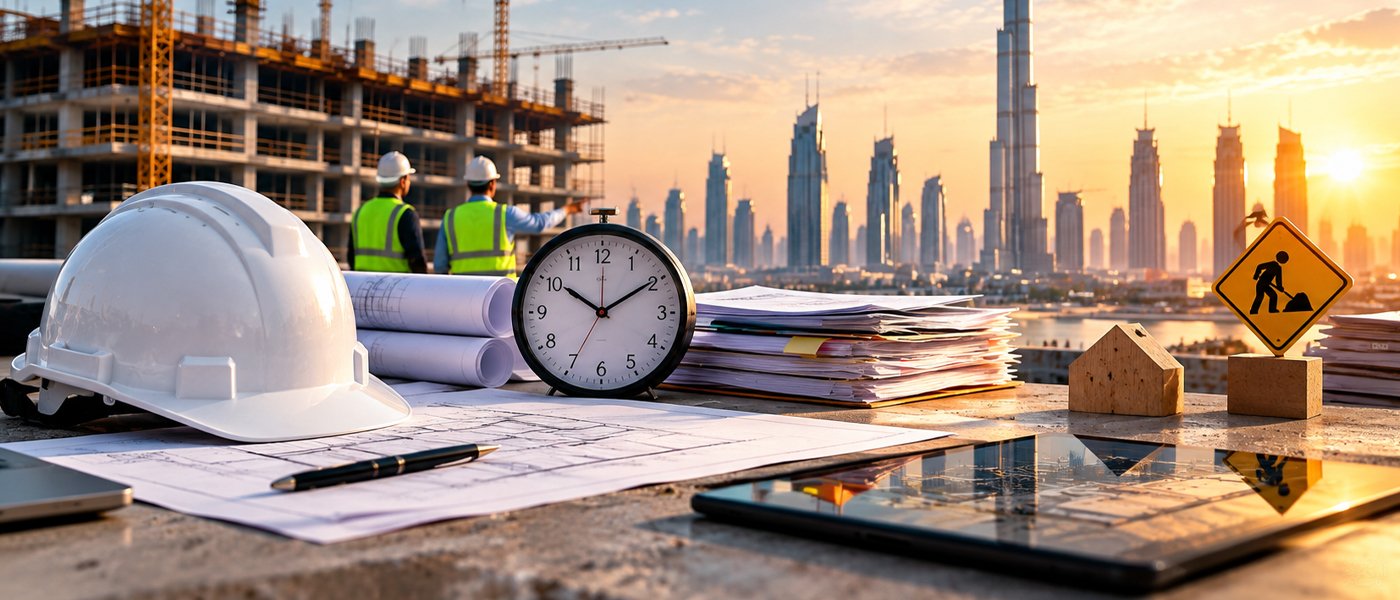
In most cases, delays are not caused by a single factor but by a series of events. The following are five common causes of delay that every developer should monitor.
1. Late Design Changes and Incomplete Coordination
A construction programme depends on having reliable design information at the right time. When architectural, structural or MEP information changes after construction has started, contractors may need to stop work, revise drawings, reorder materials or redo completed work.
Dubai's approval framework also requires coordination across multiple technical disciplines. For example, Dubai Development Authority's final design approval process requires architectural, structural and mechanical drawings, structural calculations and, where applicable, approvals or NOCs from other authorities and service providers.
Major changes during the construction stage can require a formal redesign review.
For developers, the lesson is straightforward: design coordination must happen before the affected work reaches site.
HKMG Digital uses BIM to coordinate architectural, structural and MEP designs in a single model, so clashes and design errors are identified and resolved before construction begins, not on site.
2. Authority Approvals and Documentation
Approvals are an essential part of Dubai's construction process, not an administrative task that can be left until the last minute.
Dubai Municipality has established procedures for building permits, completion certificates and technical inspections, with requirements varying according to the type of building.
A delay can occur when a submission is incomplete, drawings require amendments, supporting documents are missing or a project requires additional NOCs.
Dubai's construction activity is substantial. Dubai Municipality reported more than 30,000 building permit applications in the first half of 2025, representing a 20% increase from the previous year.
Developers therefore need an approval tracker that connects authority submissions and decisions directly to the construction programme.
3. Long-Lead Procurement and Supply Constraints
A project can have labour and equipment ready on site and still lose valuable time if a critical component has not arrived.
In our recent projects, items such as high speed doors, dock levellers, lifts, escalators and generators have had lead times of more than 12 weeks, and specialist MEP labour shortages are a particular concern in Dubai. In 2026, shipping disruptions in the region also extended delivery times for imported equipment on many UAE projects.
Concrete supply has also received attention. In February 2026, authorities met with ready-mix concrete companies specifically to discuss market supply, shortages and their potential impact on construction project timelines.
This makes procurement planning an important part of programme management. Long-lead items should be identified early, assigned procurement dates and monitored against the construction schedule.
4. Variations and Uncontrolled Scope Changes
A seemingly small change can have a much larger effect once construction is underway.
Changing a specification may require new materials. Moving an opening can affect structural and MEP works. Adding floors, changing unit types or modifying a structural system can trigger formal redesign requirements.
If variations are approved without assessing their effect on cost and time, the developer may face both additional expenditure and a later completion date.
A strong project management process records each proposed variation, evaluates its programme and financial impact and ensures that the appropriate approval is obtained before work proceeds.
5. Weak Contracts, Records and Delay Management
Not every delay is caused by physical construction problems. Unclear contractual responsibilities and poor project records can make delays more difficult to manage and resolve.
Construction contracts typically address matters such as completion dates, variations, payment terms and the consequences of delay. Missing approvals, unclear instructions, unsigned variation orders, delayed payment certifications and weak site records are common factors that complicate delay claims and disputes in Dubai.
Developers should therefore maintain clear records of instructions, approvals, programme updates, variations, site events and contractor performance.
Good documentation does not prevent every delay, but it makes responsibilities and project impacts much clearer when problems arise.
How Can Developers Reduce Delay Risk?
The best approach is to identify potential delays before they reach the critical path.
A professional project management consultancy in the UAE can help developers manage:
- Cost planning
- Design management, digital design coordination and technical reviews
- Selection of consultants, contractors and suppliers
- Commercial and contracts administration
- Tendering and techno-commercial analysis
- Value engineering
- HSE management and construction management
- Authority approvals and NOCs
- Procurement schedules
- Contractor performance
- Programme updates
- Variations and change control
- Risk registers
- Quality inspections
- Project documentation
- Testing, commissioning, snagging and handover
The objective is not simply to report that a project is already late. It is to identify what could make it late, when that risk may occur and what action can be taken now.
Why Early Intervention Matters
Once a critical activity slips, recovering lost time can be costly, often requiring extra resources, alternative suppliers or a revised schedule.
Early intervention increases the options available to the project team.
HKMG PMC's early intervention brings together programme, procurement, design, cost and risk information, so decisions are taken before issues become critical.
Keep Your Dubai Project on Schedule
Construction delays can affect financing, contractor costs, handover commitments and the overall return on a development. While every project carries some degree of risk, disciplined planning and active project management can reduce avoidable delays and give developers greater control over the programme.
Planning a construction project in Dubai? Contact our project management team to discuss your project requirements and discover how proactive programme management, risk control and stakeholder coordination can help keep your project moving towards timely completion.
Visit www.hkmgpmc.com, email mukesh.chelani@hkmgpmc.com or call +971 58 607 2560 (WhatsApp +971 50 887 7960).
Stay Updated


